
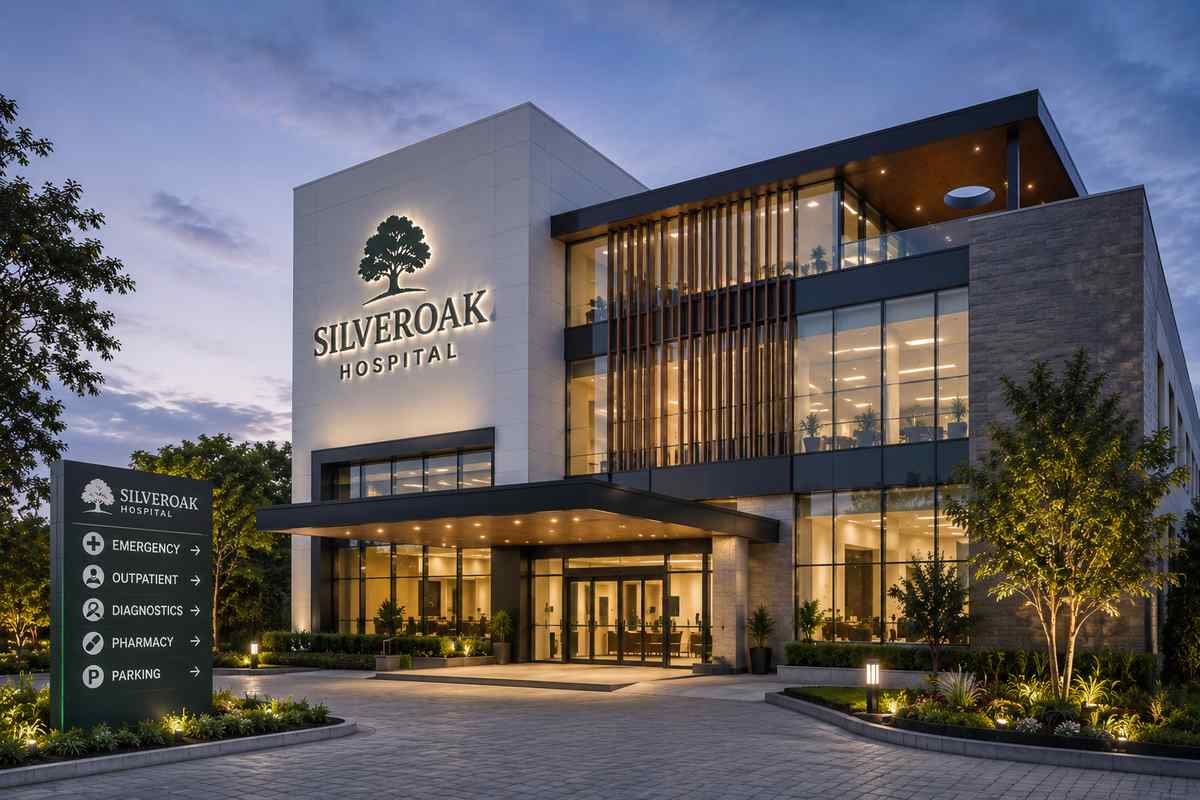
Silvaris Trauma Center — Denver, CO
Denver, CO
320
Licensed Beds
110+
Specialists
23+
Years of Excellence
6.2K+
Procedures / Year
About Silvaris Trauma Center — Denver, CO
SilverOak Trauma Center in Denver is Colorado's premier Level I Trauma Center, serving as the definitive care destination for the most severely injured patients across the Rocky Mountain region — a geographic catchment area encompassing Colorado, Wyoming, and portions of Utah, New Mexico, and Nebraska. Our 320-bed hospital is built around the trauma mission, with a 24/7 trauma surgery service, a neurosurgical intensivist program, and a burn unit accredited by the American Burn Association managing the full spectrum of traumatic emergencies from alpine rescues to urban interpersonal violence.
Altitude medicine is a genuine clinical subspecialty at SilverOak Denver. Our altitude and wilderness medicine program — staffed by physicians with formal fellowship training in high-altitude physiology and emergency medicine — evaluates and treats acute mountain sickness, high-altitude pulmonary edema (HAPE), and high-altitude cerebral edema (HACE) in the visitors and residents who populate Colorado's mountain communities and ski resorts year-round. We collaborate closely with mountain rescue teams across the Front Range and Summit County to provide medical direction and physician response for helicopter rescues above treeline.
Ski and mountain sports injury is another defining specialty. SilverOak Denver's orthopedic trauma team — supplemented during peak ski season by additional fellowship-trained surgeons — manages ACL tears, tibial plateau fractures, ski boot fractures, snowboarder's ankle injuries, and spinal injuries sustained on Colorado's world-famous slopes. Our orthopedic trauma program maintains formal relationships with major ski resorts and mountain towns, providing on-mountain physician coverage and rapid transfer protocols for injured skiers and snowboarders.
Beyond trauma, SilverOak Denver operates a 24-bed burn and wound care unit managing burn injuries from flame, scald, chemical, and electrical mechanisms, as well as complex chronic wounds, necrotizing fasciitis, and frostbite reconstruction. Our critical care medicine division provides intensivist-led management in two separate ICUs — one medical and one surgical-trauma — with twenty-four-hour in-house intensivist coverage that is associated with demonstrably lower ventilator-associated pneumonia rates and shorter ICU lengths of stay.