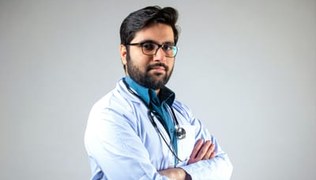
Robert Chen
Acute ischaemic stroke involving the left middle cerebral artery, presenting with sudden onset right-sided hemiplegia, global aphasia, and right-sided hemisensory loss. Robert arrived at the emergency department within forty-five minutes of symptom onset. CT angiography confirmed a left M1 occlusion, and he underwent successful mechanical thrombectomy with TICI 2b/3 recanalisation, achieving near-complete restoration of vessel patency. Residual deficits included mild right arm weakness, mild expressive aphasia, and right-sided sensory impairment, requiring intensive inpatient neurorehabilitation.
Robert Chen was fifty-two years old and in the middle of a morning meeting when the right side of his body stopped working. The pen dropped from his hand. The words he was forming disappeared before they reached his mouth. His colleague, sitting across the table, saw his face change and acted immediately — dialling emergency services while Robert sat in a confusion that he would later describe as being underwater and unable to find the surface. The paramedics who arrived recognised a stroke within seconds. Robert arrived at Silvaris Neuroscience Center in St Louis forty-five minutes after the first symptom. That timing, his stroke neurologist would later tell him, changed everything.
The thrombectomy team was assembled by the time the ambulance arrived. CT angiography confirmed a complete blockage of the left middle cerebral artery — the vessel that supplies the language, movement, and sensory areas of the dominant hemisphere. A catheter was threaded from Robert's groin to his brain, and the clot was mechanically retrieved in a procedure that lasted fifty minutes. When recanalisation was confirmed, the interventional neuroradiologist described blood flowing freely through the artery for the first time in over an hour. Robert was moved to the stroke unit, where his neurologist explained what had happened with remarkable clarity given that Robert could not yet speak coherently. His wife, who had arrived during the procedure, sat beside him and held his hand throughout.
Rehabilitation began within twenty-four hours. The speech and language therapist introduced herself on the morning of day two, conducted a bedside assessment of Robert's language and swallowing function, and began the painstaking work of mapping what had been affected and what had been preserved. His aphasia was most pronounced in expressive speech — he understood most of what was said to him but could not reliably retrieve words. The physiotherapist began restoring movement and strength to his right arm and leg simultaneously. The occupational therapist worked on fine motor skills and cognitive rehabilitation. Robert attended sessions three times daily during his inpatient stay, a schedule that exhausted him but which he understood was the best chance of maximising recovery.
Discharge from the inpatient unit came after three weeks. Community neurorehabilitation — an intensive outpatient programme of physiotherapy, speech and language therapy, and occupational therapy — was arranged to begin within two weeks. Robert's secondary prevention regime was carefully optimised: dual antiplatelet therapy, high-intensity statin therapy, antihypertensive medication, and — when further cardiac monitoring identified paroxysmal atrial fibrillation as the probable cause of his stroke — anticoagulation with a direct oral anticoagulant. The transition from hospital to community was coordinated meticulously, with a structured handover to his GP, a follow-up neurology clinic appointment booked, and written communication provided to every clinician involved in his care.
Eighteen months after his stroke, Robert has returned to work on a full-time basis. His right arm function is near-complete. His walking is entirely normal. His speech is fluent in conversational settings, with occasional word-finding hesitations under pressure — something he has developed strategies to manage and which few people who meet him now would notice. His neurologist describes his recovery as "among the best outcomes we see for a large vessel occlusion stroke." Robert attributes it to three things: the speed of the intervention, the quality of the rehabilitation, and the refusal of his therapy team to set a ceiling on what was possible. "They never told me to accept a limitation," he says. "They told me to keep working, and they kept working beside me."