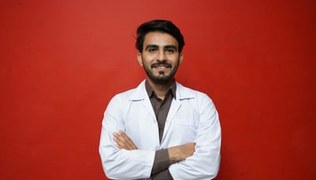
Charles Rivera
Acute ST-elevation myocardial infarction (STEMI) affecting the anterior territory, managed with emergency primary percutaneous coronary intervention (PCI) and drug-eluting stent implantation to the left anterior descending artery. Charles presented with typical chest pain and ST elevation on ECG, achieving door-to-balloon time of 43 minutes. Post-infarct echocardiography revealed moderately impaired left ventricular function (EF 38%), necessitating optimised heart failure therapy and enrolment in a comprehensive cardiac rehabilitation programme.
Charles Rivera was fifty-three years old, in the middle of a project meeting at work, when the pain hit him. It began in the centre of his chest, spread to his jaw and left arm, and within minutes he was on the floor. Colleagues called an ambulance. By the time he arrived at Silvaris Heart Institute in Newark, the ECG showed unmistakable signs of a major heart attack. He was taken directly to the cardiac catheterisation laboratory, where a blocked artery was identified and a stent was placed within forty-three minutes of his arrival. He had been minutes away from irreversible catastrophic heart failure. Charles knew none of this at the time — he learned it later, reading his discharge summary with trembling hands.
Recovery from the acute event was managed in the coronary care unit over four days, where the nursing team monitored his heart rhythm, fluid balance, and medication continuously. His cardiologist visited daily, providing Charles and his wife with honest, measured updates on his heart function and the road ahead. An echocardiogram showed that his heart muscle had been affected — the ejection fraction, a measure of pumping efficiency, was below normal — and he was started on a combination of medications to protect and gradually recover cardiac function. 'He explained every medication and why I was on it,' Charles says. 'I left hospital with a list, a reason for each drug, and a clear plan for follow-up. I understood what had happened to me, and that understanding helped me take control of my recovery.'
Cardiac rehabilitation began six weeks after discharge. Charles attended the twelve-week supervised group programme at Silvaris Heart Institute three times per week, combining progressive aerobic exercise on treadmills and cycle ergometers with education sessions covering diet, medication, stress management, and cardiovascular risk reduction. 'I expected it to feel like a hospital appointment,' he says. 'Instead it felt like being part of a team. There were eight of us in the group. We became close. We competed quietly with each other to do better each session.' The exercise physiologist monitored his heart rate and rhythm during every session, ensuring the programme was both safe and effective.
The dietary review, conducted by the programme's clinical nutritionist, revealed several habits that had contributed to his risk: a high saturated fat intake, too much salt, and a pattern of skipping meals that caused energy crashes and poor food choices. The changes recommended were practical and culturally sensitive — Charles's Puerto Rican heritage meant that the nutritionist worked with traditional dishes rather than against them, finding healthier preparation methods for the foods his family loved. His wife attended the nutrition sessions with him and became his partner in making sustainable changes at home. 'She became the best nutritionist I know,' Charles jokes.
Eighteen months after his heart attack, Charles's ejection fraction has recovered to 52% — effectively normal. His cardiologist describes the recovery as excellent and attributes it to the combination of optimal medical therapy and the behavioural changes Charles and his wife have sustained. He walks five kilometres most mornings, has returned to work on a phased basis, and has lost fourteen kilograms. He attends annual cardiology review and remains on his protective medication regime. 'I got a second chance,' he says simply. 'I know exactly why I am alive — it is because of the speed of the team that treated me and the quality of the programme that rebuilt me. I do not take a single day for granted.'